The $0 Dividend: Trump’s New Rule for AI Data Centers
The President demands that hyperscalers share energy costs with neighbors, but experts question if the financial gesture will outweigh the environmental toll.
By Mariana Delgado ·
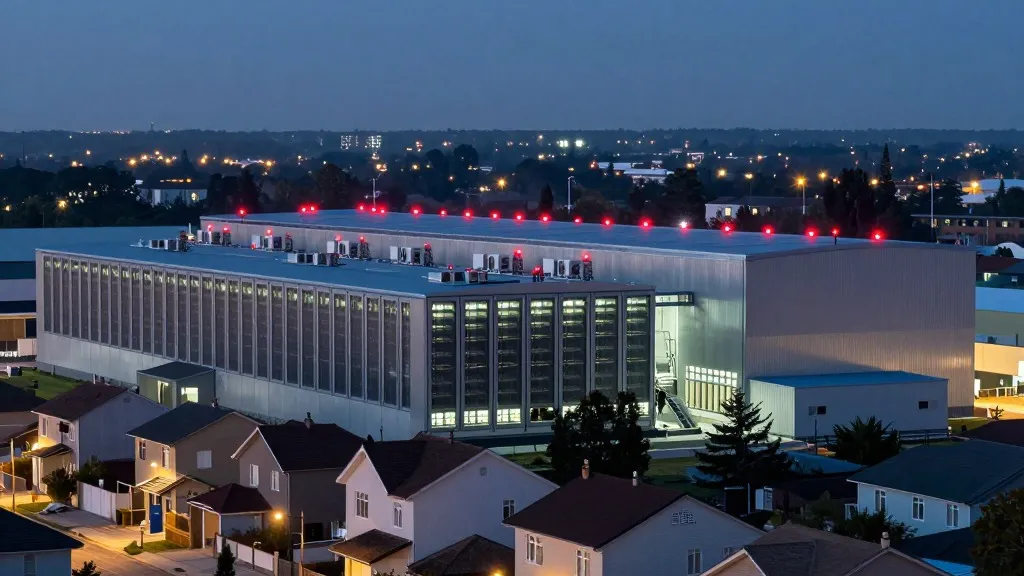
Tension between rapid technological expansion and local community tolerance has reached a critical inflection point. Small towns across the United States are increasingly resisting the arrival of massive AI data centers due to the visible strain these facilities place on local infrastructure. In response to this growing friction, President Donald Trump has intervened with a new directive aimed at altering the economic relationship between hyperscale operators and their neighbors. The core of the mandate requires data center builders to pay a dividend to the communities they impact, specifically to offset rising energy prices or even lower them. This move is designed to make these facilities more palatable to residents who often feel burdened by the presence of these energy-hungry installations.
The numbers behind this conflict are stark. Residents near these sites are currently dealing with spikes in electricity costs, alongside issues like noise pollution, water shortages, and air quality concerns. The administration has already ordered companies to generate their own power. A recently passed act further dictates that data centers must shoulder the cost of necessary grid upgrades, preventing these expenses from being passed on to local taxpayers. The new energy dividend is intended to leverage this self-generated power. If excess electricity is produced, it must be given or sold back to the local community. This mechanism is meant to directly alleviate the pain of higher utility bills for homes in the vicinity.
The administration is driven by a dual goal: maintaining a competitive edge against China in the AI arms race while winning back political favor in local districts. By framing the issue as a financial deal, the White House hopes to smooth the path for new construction. President Trump emphasized this point in a post on Truth Social, noting that data centers often become popular once a financial agreement is reached. He urged stakeholders to "MAKE DEALS, and get them built!!!" The strategy relies on the idea that a direct financial benefit can neutralize the negative perception of these massive industrial projects.
However, the practical application of this mandate remains uncertain. The term "dividend" introduces a layer of complexity, as companies typically only pay such returns when they are profitable. New data center builds are often capital intensive and may not be profitable for an extended period while construction costs are recouped. Furthermore, the short-term power generation solutions currently being installed are frequently gas-powered generators. These units are known for being noisy, inefficient, and polluting, which may not be an improvement for residents living in close proximity compared to conventional grid power. Alternative generation methods take significantly longer to deploy, leaving a gap in the near-term solution.
The stakes extend beyond simple electricity bills. While financial compensation can address one facet of the problem, it does not solve the broader challenges of enormous water consumption, ecological damage, and long-term pollution. These environmental factors remain major hurdles that make data centers a difficult sell in many locations. The success of this policy will depend on whether the promised energy benefits are substantial enough to outweigh the other burdens placed on the community. If the financial gain is perceived as insufficient, the mandate may fail to achieve its goal of increasing local acceptance.
This approach reflects a broader trend in infrastructure development where economic incentives are used to secure social consent. By forcing a direct transfer of value to the community, the administration is attempting to standardize a negotiation process that has previously been ad hoc. The outcome will likely shape how future large-scale tech projects are integrated into existing communities. Whether this model becomes a template for other industries remains to be seen, but the immediate focus is on whether the energy dividend can bridge the gap between corporate expansion and local livability.
Source: Tom's Hardware