Tesla Delays Self-Driving Promise Again
Tesla has pushed its unsupervised driving feature to mid-2027, restricting it to specific robotaxi zones rather than offering it everywhere.
By Andre Williams ·
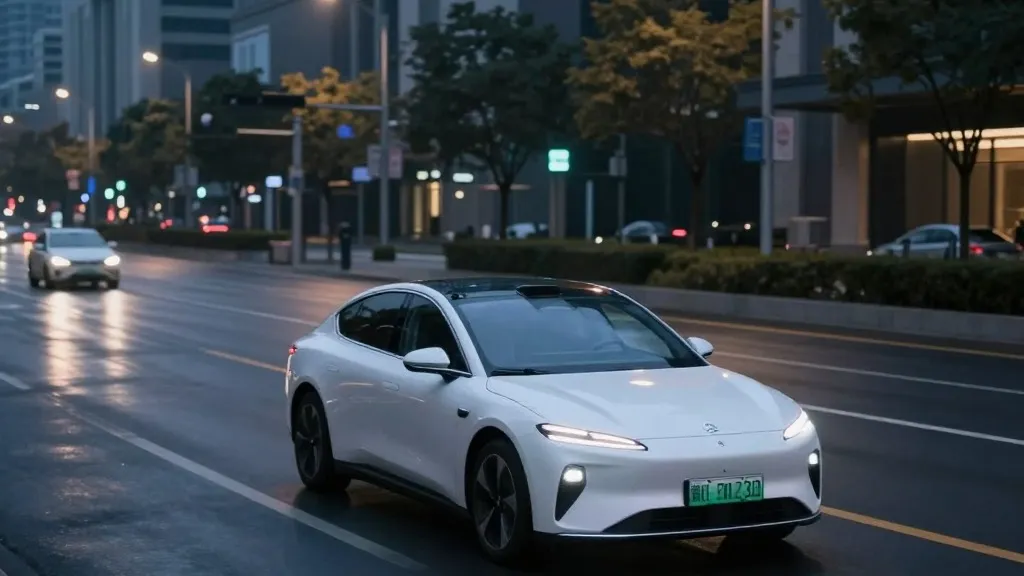
1.1 million shares backed the top question from retail shareholders on Tesla’s recent earnings call. Investors wanted to know when they could finally expect unsupervised Full Self-Driving in their personal vehicles. The answer provided by the company was a target date of the second quarter of 2027. This represents another shift in the timeline for a feature that has been promised for nearly a decade.
During the Q3 2026 earnings call, Ashok Elluswamy, Tesla’s AI chief, clarified the nature of this update. He described the rollout not as a software patch that allows owners to sleep in the back seat of their Model Y, but as a process of integrating private vehicles into Tesla’s managed robotaxi fleet. This distinction is crucial. It means the car does not become a universal self-driving taxi that goes anywhere the owner wants. Instead, it becomes part of a specific network operated by Tesla.
The operational scope of this new system is currently limited. Tesla’s robotaxi service is active in only six US metropolitan areas. Within these cities, the service areas cover small, specific slices of the map. For example, the Miami zone largely covers West Miami and a strip extending toward Doral and Sweetwater. Orlando and Tampa launched similar small geofences in July. These zones are not city-wide. They are tight, controlled environments.
Inside these designated zones, the driving behavior is also restricted. The vehicles stick to low-speed routes and largely avoid highways. They steer clear of the more complex parts of town. In the Bay Area, the service is not even fully unsupervised. Due to California regulations, Tesla must keep a safety driver in every car. This is because Tesla has not yet released the necessary data to the California DMV, a requirement for moving beyond level 2 autonomous systems.
The scale of the current operation remains modest. By the end of Q3, Tesla reported that its robotaxi fleet had accumulated nearly 2 million unsupervised miles. This milestone was reached one month after the Cybercab joined the fleet in Austin. However, third-party tracking data from earlier this spring showed only dozens of fully driverless Teslas on the road. This number is far below the hundreds of thousands of vehicles Elon Musk had previously discussed. Competitor Waymo, which was already operating in Orlando and Tampa before Tesla’s entry, has logged over 3 million miles.
This new plan differs significantly from the original marketing pitch. For years, Tesla sold the idea of a car that would eventually drive itself anywhere via a simple software update. In July 2025, Musk told investors that unsupervised personal use would be available by the end of that year in certain geographies. A year prior, he expressed surprise if the technology wasn't ready the following year. Owners of hardware version 3 (HW3) have already been told their cars cannot run unsupervised FSD, with no clear upgrade path provided.
The new target of Q2 2027 comes with a narrower definition of the product. The car joins Tesla’s fleet, operates in Tesla’s specific zones, and follows Tesla’s operational terms. It is no longer about a car that drives you to your destination anywhere in the country. It is about your car working as a robotaxi within a small, controlled geofence. This excludes highway road trips and cross-town commutes unless both the home and workplace happen to be inside one of the designated zones.
On the call, Tesla indicated that safety remains the primary bottleneck. Elluswamy suggested that these safety issues could be resolved by next year, though he admitted the company is still guessing. The delay reflects a cautious approach to expanding the system. For buyers, this means the feature will be available in a limited capacity for quite some time. The promise of a fully autonomous car that goes anywhere has effectively been replaced by a niche service that operates in specific urban pockets. Shareholders and customers are left with a specific date, but a much smaller product than originally envisioned.
Source: Electrek