Tesla Optimus External Deliveries Shift to Late 2027 Amid Hand and AI Hurdles
Elon Musk has pushed back the timeline for selling Tesla's humanoid robots to outside customers, citing persistent challenges with mechanical durability and artificial intelligence.
By Anna Nowak ·
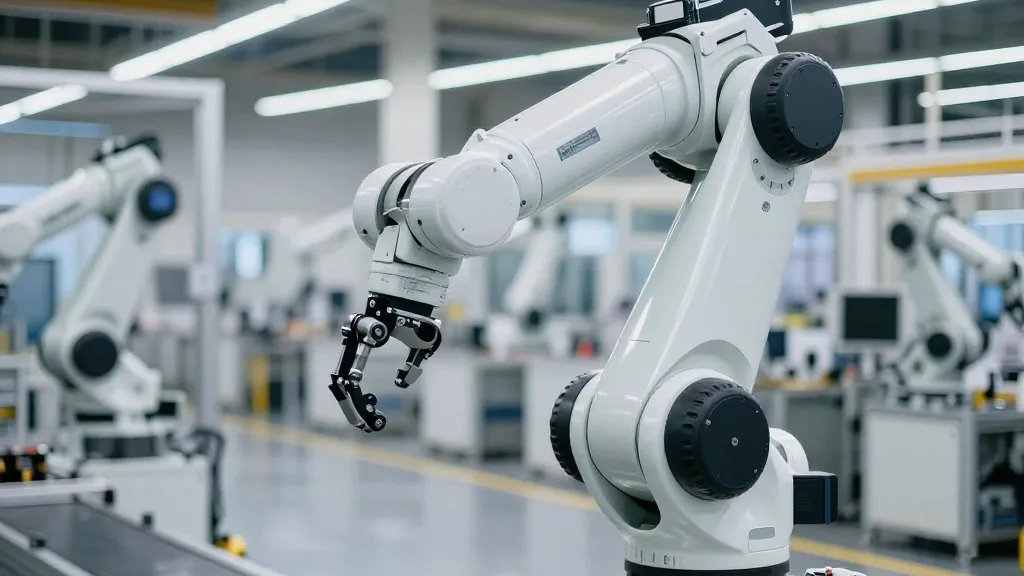
The race to deploy general-purpose humanoid robots has hit a snag, with Tesla officially moving its target for external Optimus deliveries to the end of 2027. During the company’s Q3 2026 earnings call, CEO Elon Musk acknowledged that the robot’s hands, overall durability, and artificial intelligence require significant refinement before it can be handed to industrial clients. This update marks another adjustment in a timeline that has consistently slipped, reflecting the broader technical difficulties facing the entire robotics sector.
The path to a production-ready humanoid robot has been marked by shifting goals. In 2024, Musk predicted internal use by 2025 and high-volume external sales by 2026. By January 2025, he claimed Tesla would build approximately 10,000 units that year, with several thousand performing useful work by year-end. However, he later admitted that none of the robots had reached that level of utility. Now, the focus has shifted to a late-2027 window for delivering the machines to companies outside of Tesla.
Tesla has begun early production of the Optimus on its high-volume line in Fremont, California, a facility previously used for Model S and Model X vehicles. Musk stated that while the majority of the infrastructure designed to handle a million robots annually is already installed, reaching that capacity of roughly 20,000 units per week will take at least a year, and possibly longer. This delay is attributed to ongoing changes in the robot’s design, particularly in its electromechanical components and reliability systems.
The primary technical bottleneck remains the robot’s hands. A Tesla engineer identified the hand assembly and custom gears as the most challenging hardware areas, with Musk agreeing that the fingers must be soft enough to handle delicate objects yet durable enough to withstand constant industrial wear. Unlike human skin, robotic fingers cannot heal, making material and design engineering a critical hurdle. Additionally, Tesla is still working through issues with its AI architecture, lacking the massive fleet of data-gathering vehicles that its cars provide for its Full Self-Driving system.
To address the AI data gap, Tesla plans to build 10,000 to 20,000 robots that will practice tasks in a facility known as the Optimus Academy. The company also intends to integrate its AI5 chip into the Optimus around April 2027. Musk promised a video within the next month or two demonstrating the robot performing unscripted tasks, aiming to prove that the machine can generalize beyond pre-programmed routines. This move is intended to counter criticisms that many humanoid demonstrations rely on scripted sequences that do not translate to real-world utility.
While Musk asserted on the earnings call that no competitor is close to Tesla in developing a general-purpose humanoid, industry rivals have shown significant progress. XPeng activated an automated production line for its IRON robot in Guangzhou in September, with over 80% of core processes automated. XPeng targets mass production by the end of 2026 and deliveries in the first half of 2027, a timeline similar to, if not slightly ahead of, Tesla’s. The IRON robot features 21 degrees of freedom in each hand and runs on XPeng’s in-house Turing chips.
Meanwhile, Hyundai’s Boston Dynamics has begun producing its electric Atlas robot, with all 2026 deployments already committed, including to Google DeepMind. The company opened a training center at Hyundai’s Metaplant in Georgia in September, where Atlas is learning to sequence car parts for assembly lines. Hyundai plans to deploy 25,000 robots across its plants in the coming years. Boston Dynamics took a pragmatic approach to the hand problem by prioritizing sturdy grippers for industrial parts over human-like dexterity, a strategy that bypasses the specific issue Tesla cites as its main holdup.
Despite the competitive landscape, Tesla’s Q3 shareholder letter described the units coming off the Fremont line as the first production-quality bots the company has manufactured, implying that previous iterations were not yet ready for prime time. The delay to late 2027 suggests that the complexities of creating a reliable, generalizable robot remain substantial. As competitors like XPeng and Boston Dynamics push forward with their own production milestones, Tesla’s promise of an unscripted video in the coming weeks will serve as a key indicator of whether the company is truly closing the gap between prototype and product.
The shift in timeline underscores that while building a robot is feasible, making it useful and durable is the primary challenge. With electricity costs rising and the demand for automation increasing, the race to deliver a viable humanoid worker is intensifying. Tesla’s next steps will depend on resolving the hand and AI issues, but the extended timeline suggests that the era of widespread humanoid labor may still be a few years away.
Source: Electrek