Tesla Sets Sights on 20,000 Robots a Week as Production Ramps
The company is accelerating its humanoid robot manufacturing while developing a new method for the machines to train themselves.
By Amy Swan ·
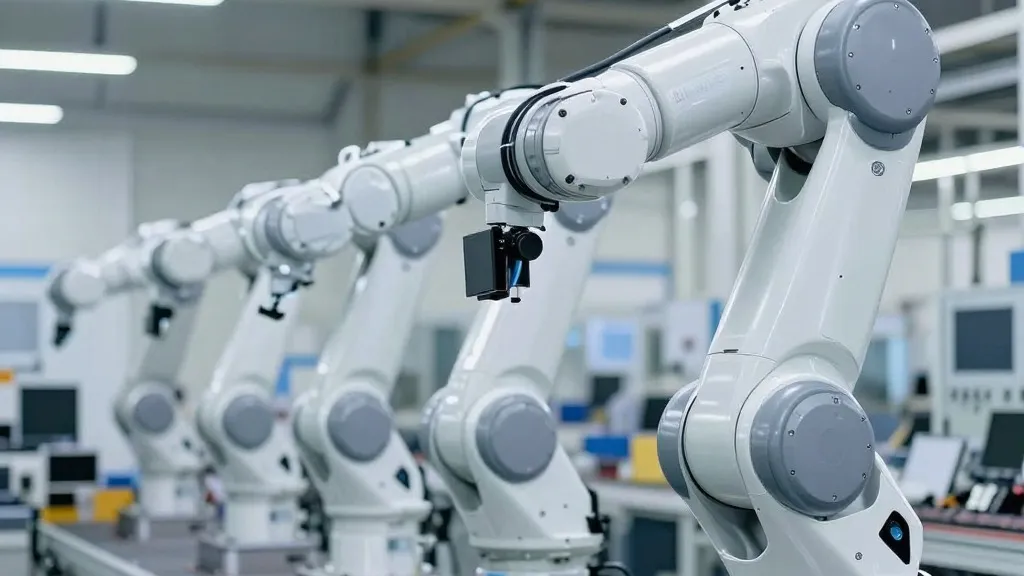
Tesla has begun assembling its Optimus humanoid robots on a dedicated high-volume line within its Fremont facility.
The company stated in its third-quarter shareholder letter that the units leaving this line represent its first production-quality robots. Tesla confirmed that its current manufacturing process has been validated as suitable for a commercial product.
The line was constructed in a space that previously produced Model S and Model X vehicles. According to prior reporting, Tesla cleared the old automotive line in 46 days to make room for robot production. This new setup is designed to build one million robots per year, with Elon Musk indicating that most of the necessary equipment for that capacity has been delivered to Fremont.
During the company's earnings call, Musk stated that output is set to climb toward roughly 20,000 robots a week as the line ramps. He described this increase as a classic S curve, noting that the initial phase of that curve has a shallow slope. The company is refining the robot's artificial intelligence, electromechanical design, reliability, and service life, with expectations that this work will be completed by the end of next year. Following this, Tesla plans to start delivering Optimus to outside companies for tasks involving dangerous, repetitive, and around-the-clock work.
The earnings call also detailed how Tesla plans to teach the robots. While its vehicles collect driving data from millions of users, the company has no such fleet for Optimus yet. A big difference with Optimus versus the cars is that we don't have this vast fleet of cars from which we can gather training data, Musk said.
To address this, the company is creating an Optimus Academy. In this program, 10,000 to 20,000 robots will practice a wide range of tasks, and the knowledge they gain will be fed into the next version of the model. Every unit that comes off the Fremont line will become a source of that training data.
Tesla plans to place its AI5 chip into Optimus next year. Musk stated that a new Optimus video should be available within one or two months, showing the robot completing tasks driven by AI rather than preprogrammed motions. He added that he took aim at rival humanoid demos that only run scripted routines, saying those would not hold up in the real world.
The supply chain is supporting the program. In September, Tesla certified Tuopu, Joyson, and Sanhua as mass production partners for Optimus components. A larger Optimus factory is also rising at Giga Texas, where drone footage from Joe Tegtmeyer showed the steel frame nearing completion, and Musk has pegged that plant's long-term target at 10 million robots a year.
Tesla executives also said Optimus production costs are trending toward the expected manufacturing cost of Cybercab, a sign the robot is being engineered for volume from the start. The hands remain the toughest piece of the design, a point Musk also made at the X Takeover event earlier this month, and that is where much of the current engineering effort is focused.
Source: Teslarati